AI vs. Foreign Live Agents: Why Automation Is Redefining Patient Outreach
For years, healthcare organizations have relied on foreign live agents to manage patient communication at scale. The logic was simple: lower labor costs enabled higher call volume. But that model was built for a different era — one where speed was limited, consistency was variable, and patients tolerated delays.

That era is over.
Today's patients expect immediate responses, seamless scheduling, and frictionless interactions. In this environment, artificial intelligence is not just a cost-saving tool — it is a performance upgrade.
In routine patient outreach — especially dental hygiene reactivation — AI is increasingly outperforming foreign live agent models in measurable, scalable ways.
The Structural Limitations of Foreign Live Agents
Latency and Missed Demand
Human-powered systems cannot operate in real time at scale. Calls go unanswered, voicemails accumulate, and follow-ups are delayed. Research shows that most consumers expect immediate engagement, especially for simple requests.
Every delay introduces friction — and in healthcare, friction leads to lost appointments.
Inconsistency in Execution
Human variability is unavoidable. Performance differs across agents, shifts, and days. Tone, adherence to scripts, and effectiveness fluctuate. In high-volume outreach like hygiene recall, inconsistency compounds into lost revenue.
Communication Friction
Even well-trained offshore agents may introduce subtle barriers:
- Accent or language differences
- Slower comprehension cycles
- Longer call times for simple tasks
Compliance and Oversight Challenges
Handling protected health information (PHI) across international teams introduces complexity in data governance, regulatory compliance, and operational visibility. For healthcare providers, this is both an operational and reputational risk.
Where AI Outperforms
Speed as a Competitive Advantage
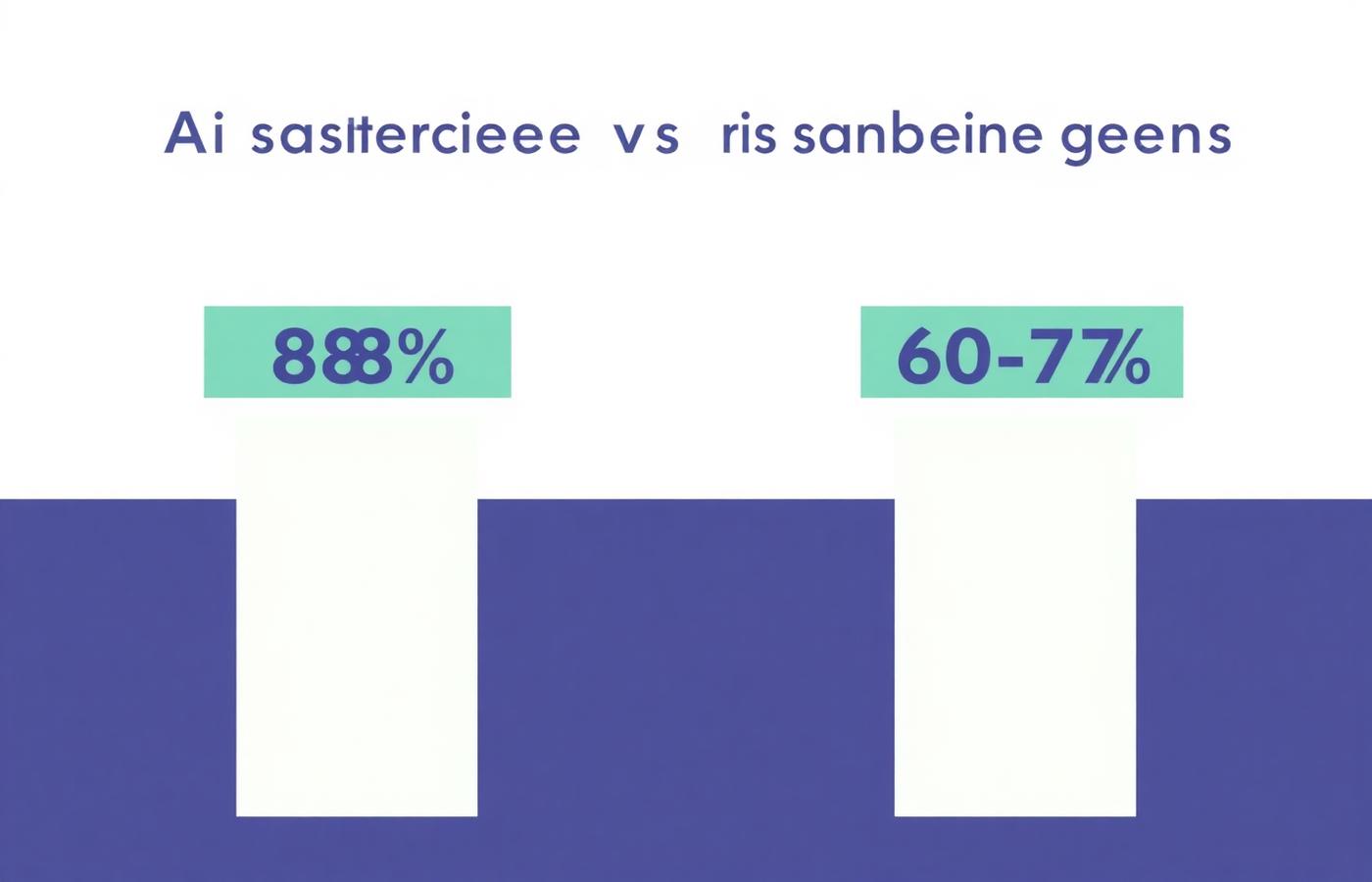
AI responds in near real time — often within milliseconds. Human response times range from seconds to minutes, or longer when callbacks are required. 88% of customers say immediate responses are critical for simple requests. In hygiene reactivation, speed directly impacts booked appointments.
Higher Satisfaction in Routine Interactions
For simple, structured workflows, AI performs exceptionally well. AI-driven interactions often achieve 85–90% satisfaction rates, and AI-resolved cases can exceed human CSAT by 3–8%. The key factor is resolution. When AI completes the task, satisfaction increases.
Consistency at Scale
AI delivers uniform tone, perfect script adherence, and no fatigue-related errors. Human performance fluctuates. AI does not. This consistency leads to more reliable scheduling outcomes, higher patient follow-through, and an improved overall experience.
Always-On Availability
AI eliminates missed opportunities — no unanswered calls, no voicemails, no delayed follow-ups. Every patient interaction is handled instantly, regardless of time or volume.
The Critical Insight: Patients Value Outcomes Over Interaction Type
Patients don't inherently prefer humans — they prefer results. They value speed, accuracy, and convenience. While many customers claim to prefer human interaction, satisfaction is ultimately driven by how quickly and effectively their issue is resolved. When AI delivers better outcomes, preference shifts.
Where AI Does Not Replace Humans
AI is not a universal replacement. It underperforms in complex or emotional conversations, escalations and disputes, and nuanced clinical discussions. These situations require human judgment and empathy.
The Emergence of the Hybrid Model
The most effective systems combine both: AI handles 60–70% of routine interactions, while humans handle complex or sensitive cases. This hybrid approach consistently produces the highest satisfaction and efficiency.
Application: Dental Hygiene Reactivation

Hygiene recall is an ideal AI use case. It is repetitive, scriptable, time-sensitive, and non-emotional. Patients don't need a conversation — they need a reminder, a quick response, and a confirmed appointment. AI delivers all three instantly and consistently. Foreign live agents introduce delays and variability into a process that depends on precision and timing.
Strategic Positioning
The strongest, most defensible message is not "AI is better than humans." It is:
"AI is better than foreign live agents for routine patient outreach — because it delivers faster response times, greater consistency, and more reliable outcomes."
This argument is evidence-based, narrowly defined, and difficult to challenge.
Conclusion
Foreign live agent models were built to reduce cost. AI-driven systems are built to improve outcomes. In a healthcare environment where speed, consistency, and convenience define success, that distinction matters.
The question is no longer whether AI can replace humans. It's whether organizations are using the right resource for the right task.
See it on your own calls.
Book a 20-minute discovery call with the Dassist team.